We know of her existence only insofar as she must have existed – since she gave birth to Mieszko I, the founder of Polish statehood. We do not know her name, nor do we even know from which family she came. And yet it was precisely she who could have played a crucial role in the early years of the future duke’s life. Who was the woman who gave birth to Polish history, only to then disappear from the pages of history?
Siemowit or Siemomysł?
According to the Gallus Anonymous, Mieszko I’s father was Siemomysł (Semimizl). This information was later repeated by other leading Polish chroniclers, headed by Wincent Kadłubek and Jan Długosz. Although contemporary foreign sources (primarily well-informed German accounts regarding Polish affairs) made no mention of Siemomysł, this figure is today considered to have actually existed.
At present, historians are unable to say much about Mieszko I’s father, whose biography conceals many mysteries. At one time, there was even debate about the correct pronunciation of his name. For many years he was incorrectly called Ziemomysł.
Linguists consider the form Siemomysł to be original, and only as a result of the failure to distinguish between the sounds „s” and „z” did the form Ziemomysł arise – in their opinion. The name Siemomysł itself is a two-part name meaning „one who thinks of family”.
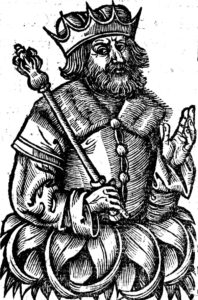
The Mysterious Reign of Siemowit
Virtually no date from Siemomysł’s life is known. We do not know how long he lived, when he was born, or when he died. The information contained in the „Lesser Poland Chronicle”, created at the end of the Middle Ages, is of no significance whatsoever, claiming that the aforementioned ruler began his reign in 912 (Lubiński codex), 913 (Kuropatnicki and Szamotulski codices), or 915 (Królewiecki codex).
Długosz’s information that Siemomysł died in 964 also inspires no confidence. As O. Balzer pointed out, among others, all these dates constitute arbitrary assumptions, unsupported by any credible source.
Another expert on early Piast genealogy, K. Jasiński, believed that Siemomysł could have ruled in the years 930-960, which would mean that he came into the world at the beginning of the 10th century. These are only pure speculations, of which the aforementioned researcher was perfectly aware. In reality, Siemomysł’s reign could have been decidedly shorter and lasted several, or perhaps a dozen or so years.
What did Siemomysł’s reign look like? Here is another difficult question to which, due to the lack of sources, we will probably never answer. As a result, historians are condemned to spinning more or less probable conjectures. According to one of them, Siemomysł could have supported the Wkrzanie in their rebellion against the Germans in 954. Unfortunately, confirmation of this theory lacks coverage in the scantily presented source material, from which it does not follow at all that the warlike Polabian tribe benefited from the support of any Slavic tribe from the region.
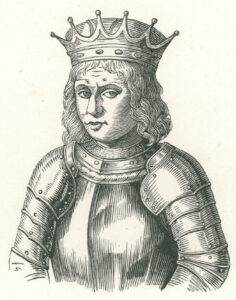
Siemomysł’s Mysterious Wife
And what do we know about Mieszko I’s mother? Practically even less than about Siemomysł. Sources created outside Poland knew nothing of her existence, as if she had dissolved into thin air along with her husband. Only our first chronicler, Gallus Anonymus, mentioned Siemomysł’s wife in a few short sentences. He did so, however, on the margins of describing the act of Mieszko’s tonsure. Thus, it was not far from the unnamed scribe not writing a word about this woman.
Indeed, characteristically, Gallus devoted very little attention to the opposite sex in his work, mentioning only 20 women, of whom only three by name. According to some scholars, the Anonymous, like most Church people in the early Middle Ages, believed that women did not play a serious role in history, and their significance in politics was actually fundamentally negligible.
Thanks to the 16th-century Czech historian Wenceslaus Hajek, it was thought for some time that Siemomysł’s wife was called Gorka. However, the artificiality of this construction was demonstrated in 1895 by O. Balzer in his monumental „Genealogy of the Piasts”, recognizing her as a purely fictional figure.
A Woman from Scandinavia?
In 2004, historian R. Prinke came to believe that Mieszko’s mother bore the name Świętosława. In light of some sources, Mieszko I’s daughter, who married two Scandinavian rulers, had the same name.
According to Prinke, Mieszko’s daughter could not have been called Świętosława because the customs prevailing in Scandinavia forbade giving children the names of living ancestors (it was expected that the child would be unhappy as a result). And since the Piast daughter gave her daughter a Slavic name, foreign to the tradition of her husband’s country, she most likely intended to commemorate one of her female ancestors. Since it could not have been her mother Dobrawa, her grandmother, presumably Świętosława, naturally suggests herself as a candidate.
R. Prinke’s idea fits perfectly into the current of Polish research deriving Siemomysł’s wife from Scandinavia. At the beginning of the 20th century, S. Zakrzewski recognized that the unnamed mother of Mieszko I could have been „a Norman, Dane, or Swede”. However, this concept met with deserved criticism because we do not really have any data that could confirm or deny this version.
The same is true in the case of J. Powierski’s hypothesis, considering Siemomysł’s wife to be the daughter of Mazovian Duke Włodzisław. As K. Jasiński emphatically pointed out, „the idea itself is intriguing, however its premises constitute only theoretical, unverifiable possibilities”.
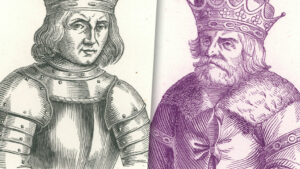
What Do We Actually Know?
It seems that no even the most original concepts will allow us to determine who Siemomysł’s wife and Mieszko I’s mother really was. Previous scholarly considerations in this area lead to the general conclusion that she must have been a woman of high birth, since only such a woman could constitute a good match for the duke of the Polans tribe, who played an increasingly important role in Slavic lands.
It is also not excluded that Siemomysł’s wife was a Christian, since Mieszko himself became involved with such a woman, although he was not baptized. Similarly, Grand Duke Vladimir the Great of Kiev also had a Christian wife from 981, although he accepted baptism only a few years later.
Bibliography:
-Balzer O., Genealogia Piastów, wstęp J. Tęgowski, Kraków 2005.
-Gieysztor A., Mieszko I, [w:] Poczet królów i książąt polskich, red. A. Garlicki, Warszawa 1978.
-Rosik S., Mieszko I i jego czasy, Wrocław 2001.
-Skibiński E., Mieszko I, Przyczynki do biografii, „Historia Slavorum Occidentis” 10 (2016).
-Wiszewski P., Domus Bolezlai, W poszukiwaniu tradycji dynastycznej Piastów (do około 1138 roku), Wrocław 2008.
-Wiszewski P., Przodkowie Mieszka w Kronice Anonima zwanego Gallem, Wokół narodzin tradycji genealogicznej Piastów, „Genealogia” 16 (2004).

Margot Cleverly
Margot's journey into women's history began with a box of forgotten letters in a Cambridge archive – suffragettes whose voices had been silenced for over a century. Since then, she's been on a mission to uncover the stories history overlooked.
What she writes about: Queens who ruled from the shadows. Scientists whose male colleagues took credit. Revolutionaries who risked everything. But also ordinary women – those who survived wars, raised families through upheaval, and shaped their communities in ways no one bothered to record.
Margot turns historical figures into real people. She writes with warmth and detail, making centuries-old stories feel surprisingly relevant. Rigorous research meets accessible storytelling – no dusty academic jargon, just compelling narratives backed by solid facts.
When she's not writing, you'll find her in regional archives, collecting oral histories, or visiting sites connected to the women she writes about.